Dev Log
Taps, swipes, and the Digital Crown: how Inner Orc's minigames work
Available now — Inner Orc is live on the App Store.
Inner Orc is an idle RPG, so most of the time it plays itself. Your orc gains Energy while you close rings, loses Morale while real hours tick by, and quests run on a two hour timer whether you are looking at your wrist or not. The minigames are the part where you actually do something with your hands. Here is how each of the ten plays.
The supply line
Five of the games gather raw materials and five craft those materials into gear, food, and potions.
Mining gives you ore, and Blacksmithing turns ore into steel bars, armor, and class weapons. Logging gives you wood, and Carpentry turns wood into planks and weapons. Fishing, Harvesting, and Hunting feed Cooking, Alchemy, and Leatherworking on the same pattern. Nothing in the crafting half works until you have run the gathering half first.
Every one of these games has to fit a screen that is roughly 210 by 117 points, with no keyboard, no second screen, and a player who is probably standing up. That budget is the reason the ten games lean on only four kinds of input: taps, rhythm, swipes, and the Digital Crown.
What every game shares
Each minigame opens with your orc walking into frame, then a "Start!" banner, then the challenge itself. A gathering run is either ten reps or three catches. A third miss ends the run early with a "Failed!" card, and misses show as red X marks in the top corner so you always know how close the edge is. Clear a run and you get a success card with a Return button and a Repeat button, so you can go again without backing out to the menu.
A failed run costs you nothing but time. Crafting games only spend your materials on success, so a botched forge attempt leaves your ore alone. The first time you open any game it shows a short how-to card, and a small info button in the corner brings that card back whenever you want it.
With that established, here is what makes each group different.
Taps on the beat: Mining and Blacksmithing
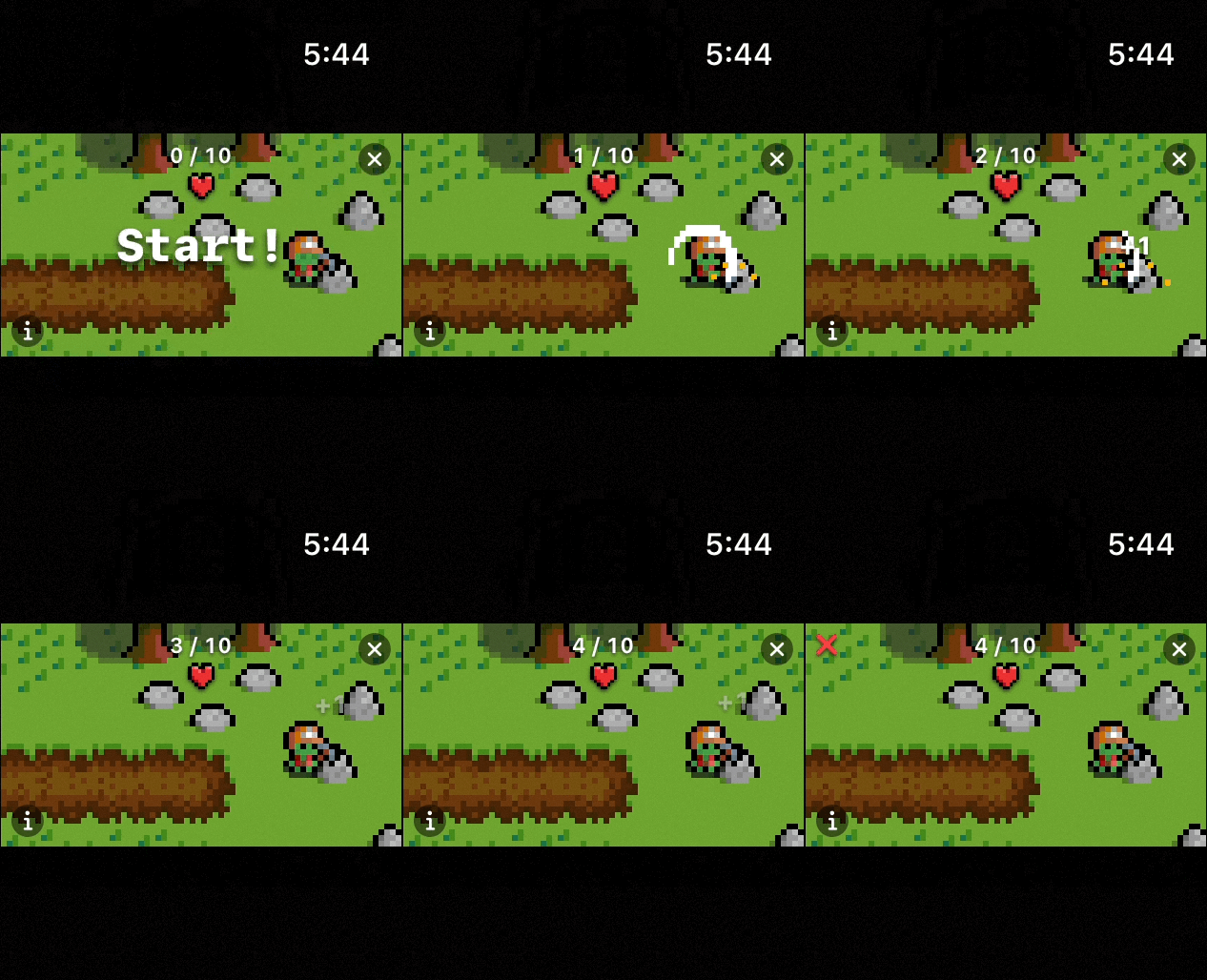
Mining and Blacksmithing are rhythm games. A beat plays once per second, and your job is to tap the screen on the beat to swing the pickaxe or bring the hammer down. Land the tap within about 150 milliseconds of the beat and it counts as a hit. Fall outside that window and it counts against you.
Ten clean hits break the rock or finish the piece. The swing animation locks out new taps for a fraction of a second while it plays, so drumming on the glass gets you nowhere. You have to find the tempo and hold it for ten beats. Blacksmithing adds one wrinkle before the first swing: you choose what you are forging, and that choice sets how much ore the run will cost you.
These two are the most arcade-style games in the set. Once the tempo clicks they go fast.
The Digital Crown, four different ways
The Crown is the piece of hardware a phone game cannot borrow, so four of the minigames are built around it, and they treat it very differently.
Logging and Carpentry are back-and-forth games. In Logging you roll the Crown up to raise the axe, then reverse it to bring the swing through. Carpentry is the same wrist motion on a two person saw, drawing back and then pushing forward into the cut. Both punish overturning. Keep cranking in one direction past the point where you should have reversed and that is a miss, with a one second cooldown after it so a single slip does not snowball into three. Ten strokes clears the log or the plank.
Hunting uses the Crown as a bow draw. You wind it to pull the string back, and the draw is tuned about three times heavier than the Logging swing so it feels deliberate. Once the bow is fully drawn, you tap the boar to loose the arrow. Tap before the draw finishes and you miss. Wind past the hold and you overdraw, which also misses. Three arrows land the hunt.
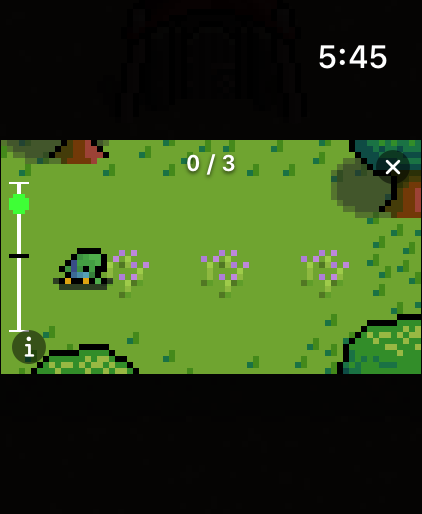
Harvesting turns the Crown into a position dial. A marker slides up and down a gauge on the left edge of the screen, and a highlighted band tells you where it needs to be. Line the marker up inside the band, then tap the flower to pick it. The band jumps to a fresh spot for each of the three flowers, so you re-aim every time, and a tap while the marker sits outside the band is a miss.
Alchemy is the outlier, because it rewards going slow. You turn the Crown gently and evenly to pour reagents into the cauldron while the game watches your speed. A flick of the wrist, or one stretch of rotation that arrives too quickly, spills the pour and costs you a miss. Three careful pours brew the potion. It is the only game in Inner Orc where the right move is to barely move at all.
Swipes and reaction time
Leatherworking is a swipe game. The screen shows a direction, up, down, left, or right, and you swipe that way to cut the hide. Then it shows the next one. Ten prompts in a row, each waiting for its matching swipe, and a wrong direction is a miss. It reads like a quick-draw drill once it gets moving.
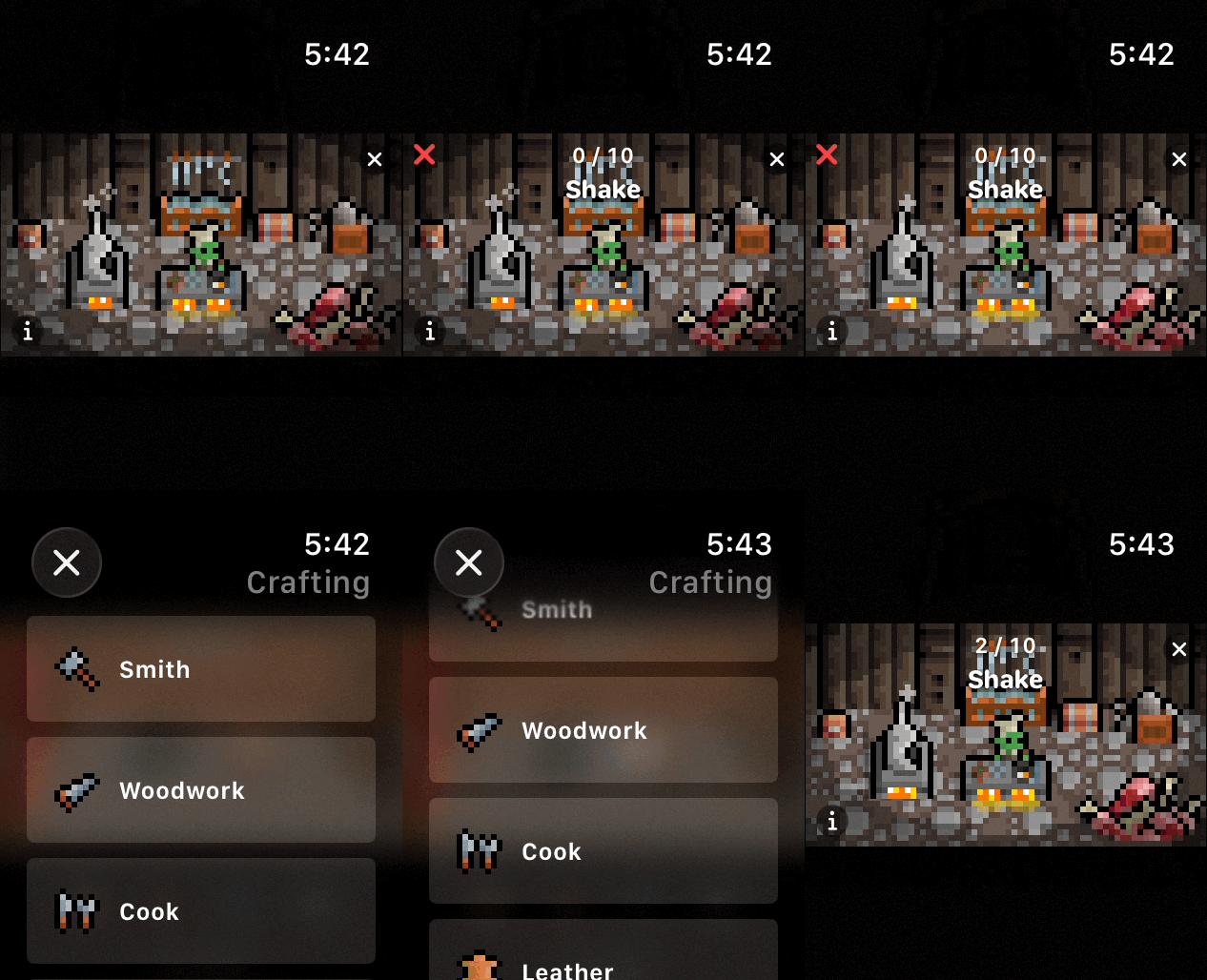
Cooking mixes two inputs. Prompts that say Shake are answered by rocking the Crown down and back up in one motion inside a short window. Prompts that say Flip are answered with a swipe up. The recipe runs ten prompts long and never asks for the same action three times straight, so you keep switching between your wrist and your thumb. What you are cooking, a plain meal or a hearty feast or a pet treat, sets the ingredient cost.
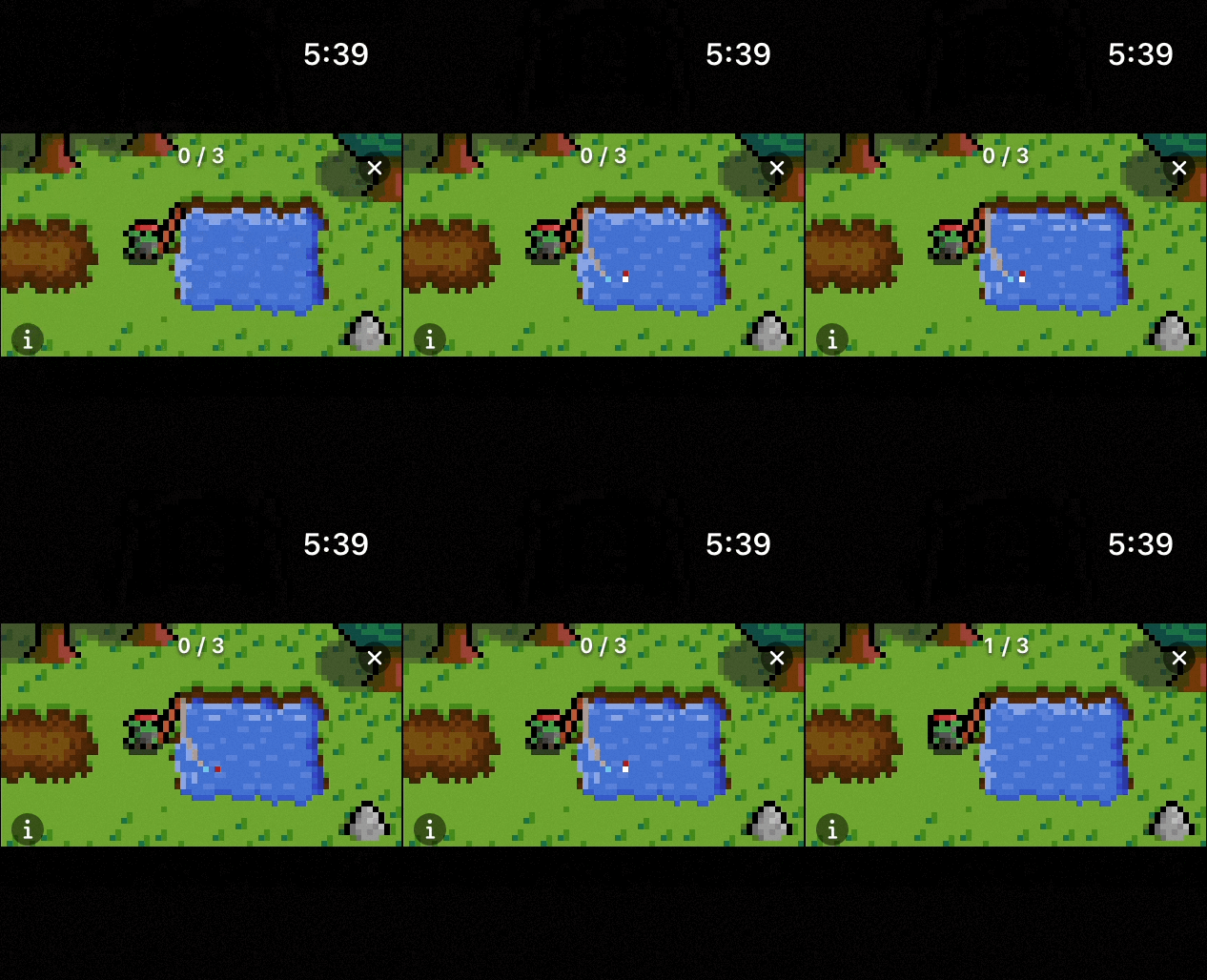
Fishing is a waiting game with a fast finish. You tap the pond to cast, then the line sits for somewhere between five and ten seconds. You feel light nibbles through the haptics while nothing real is happening. When the fish actually takes the bait, a stronger rumble kicks in and you have a one second window to tap and set the hook. Tap during the wait, before the real bite, and that is a miss. Set three hooks and you haul in a full catch.
How it loops back
The materials these games produce are the entire supply chain for the rest of Inner Orc. Gear wears down five to ten percent per quest and breaks at zero durability, and the only repair path is a crafting run at the anvil or the workbench. Food hands your orc an energy meal bonus. Potions give timed buffs on quest efficiency.
Two systems reach into the minigames from outside. Some rare gear adds a flat bonus to what a successful run yields, so a good tool or a good ring means every gather brings back a little extra. And your orc's class decides which crafting outputs even appear on the menu: a Ranger builds a bow at Carpentry, a Rogue forges twin daggers at the anvil. Retire an orc and start a new class and that menu changes with it.
None of the ten games run longer than a minute, which is the point. They are built for the ninety seconds while the coffee brews. Each one is still a genuine skill check with a genuine fail state, so walking away with the ore still feels like you earned it.