Dev Log
Inner Orc is out now: here's the whole game, start to finish
Available now: Inner Orc is live on the App Store for Apple Watch.
Inner Orc is a pixel-art idle RPG built exclusively for watchOS. There's no iPhone app to open and no companion screen. You raise an orc, gather and craft, gear up, quest, level, and eventually retire the thing, all from your wrist. This is the walkthrough: what happens from the moment you install it to the moment you're staring at a level 6 Lich deciding whether to throw it all away and start over.
The first five minutes
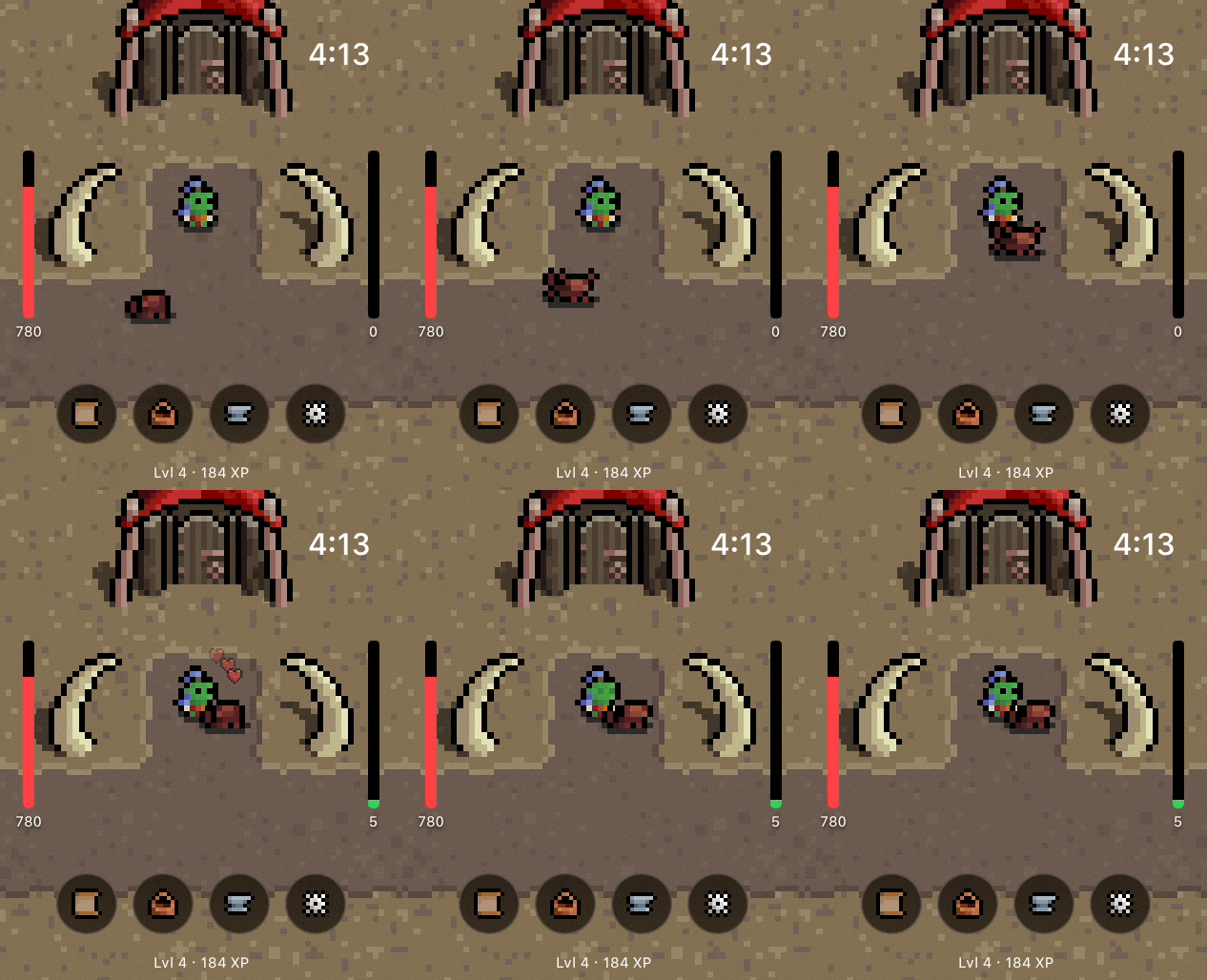
Install Inner Orc and, past the HealthKit permission prompt, your orc is just standing there. A toast tours the Gathering, Crafting, and Status menus, explains Energy (the red bar quests spend) and Morale (the green bar that governs how well quests run), then gives your first order: start the Pet Search quest.
Pet Search needs no gear and no class. Send your orc out and it returns with a companion, small, loyal, non-aggressive, that you can name and pet for a Morale bonus every ten minutes (a crafted Pet Treat resets the cooldown early). It's the first thing that's just yours, and once that quest starts, onboarding steps aside for good.
Energy and Morale: the loop tied to your actual body
Here's the part that makes Inner Orc different from every other idle game with a resource bar: the resources are tied to HealthKit, not to a timer you can cheat by waiting.
Energy is the currency quests spend. It accrues passively (+10 every half hour on the wall clock) up to a soft cap of 1,000, so leaving your watch in a drawer for a week doesn't hand you a windfall. What blows past that cap is closing your Activity rings. Move, Exercise, and Stand each closed ring is worth +150 Energy, tracked separately for today and yesterday so a ring you closed after midnight still counts. Eating a crafted meal adds another flat +100, once a day.
Morale works the other direction. It sits on a 0–100 scale and decays on its own: −3 every two hours just for existing, and a harsher −10 penalty if twelve hours pass without your orc doing anything at all. The way back up is a real Apple Watch Mindfulness session: log one that's at least 60 seconds long and Morale credits +20, with credit held for 72 hours so you're not racing the clock the second you close the app. Questing itself also keeps Morale from going stale, and petting your companion is worth a small top-up too.
Questing: where Energy and Morale actually go
A quest costs 200 Energy and runs on a fixed two-hour timer (camp upgrades shave a discount off that cost, more on that below). While it's active, your orc is either walking a road in a scrolling side-view scene or standing across from something that needs fighting in a static battle scene, picked at random from eight backdrops: forest roads, a swamp, a dungeon, a fortress approach. You don't play the fight; you watch it resolve, check back, and claim.
There are seven quest kinds, and they're not interchangeable flavor text. Four are always available (Plunder, Ransack, Pillage, and the now-familiar Pet Search) and three (Raid, Infiltrate, Subjugate) are gated behind your class's affinity: Might, Cunning, or Focus. A Barbarian can run Raid; a Warlock can't, and won't even see it in the menu. It's the game's quiet way of making the twelve classes feel structurally different, not just reskinned.
The unrestricted quests double as the material spigot: Pillage drops ore and hide, Ransack drops plant and log, Plunder drops plant and log in a different ratio, and all three carry a 20% base chance at something rarer: a class-specific Swift weapon from Pillage, upgrade armor pieces from Pillage and Ransack, boots and rings from Plunder. Claim a quest and you get XP (20–24 depending on the kind) plus whatever materials and luck rolled. Cancel one early and you eat a small Morale penalty for it, so quest selection is a real commitment, not a toggle.
Gathering and crafting: the supply chain
Materials are useless sitting in a bag. Five gathering minigames (Mining, Logging, Fishing, Harvesting, Hunting) each feed one crafting counterpart: Blacksmithing turns ore into steel bars, armor, and class weapons; Carpentry turns wood into planks and weapons; Cooking, Alchemy, and Leatherworking round out food, potions, and hide goods on the same pattern. Nothing on the crafting side works until you've run the gathering side first.
Every one of the ten games is built around a screen that's roughly 210×117 points, so the input vocabulary is deliberately small: rhythm taps for Mining and Blacksmithing, four completely different uses of the Digital Crown for Logging/Carpentry, Hunting, Harvesting, and Alchemy, swipes for Leatherworking, a two-input mix for Cooking, and a nibble-then-strike timing game for Fishing. None of them run longer than a minute, each has a real fail state, and a failed gathering run costs nothing but time. Crafting only spends materials on success, so a botched forge doesn't cost you the ore.
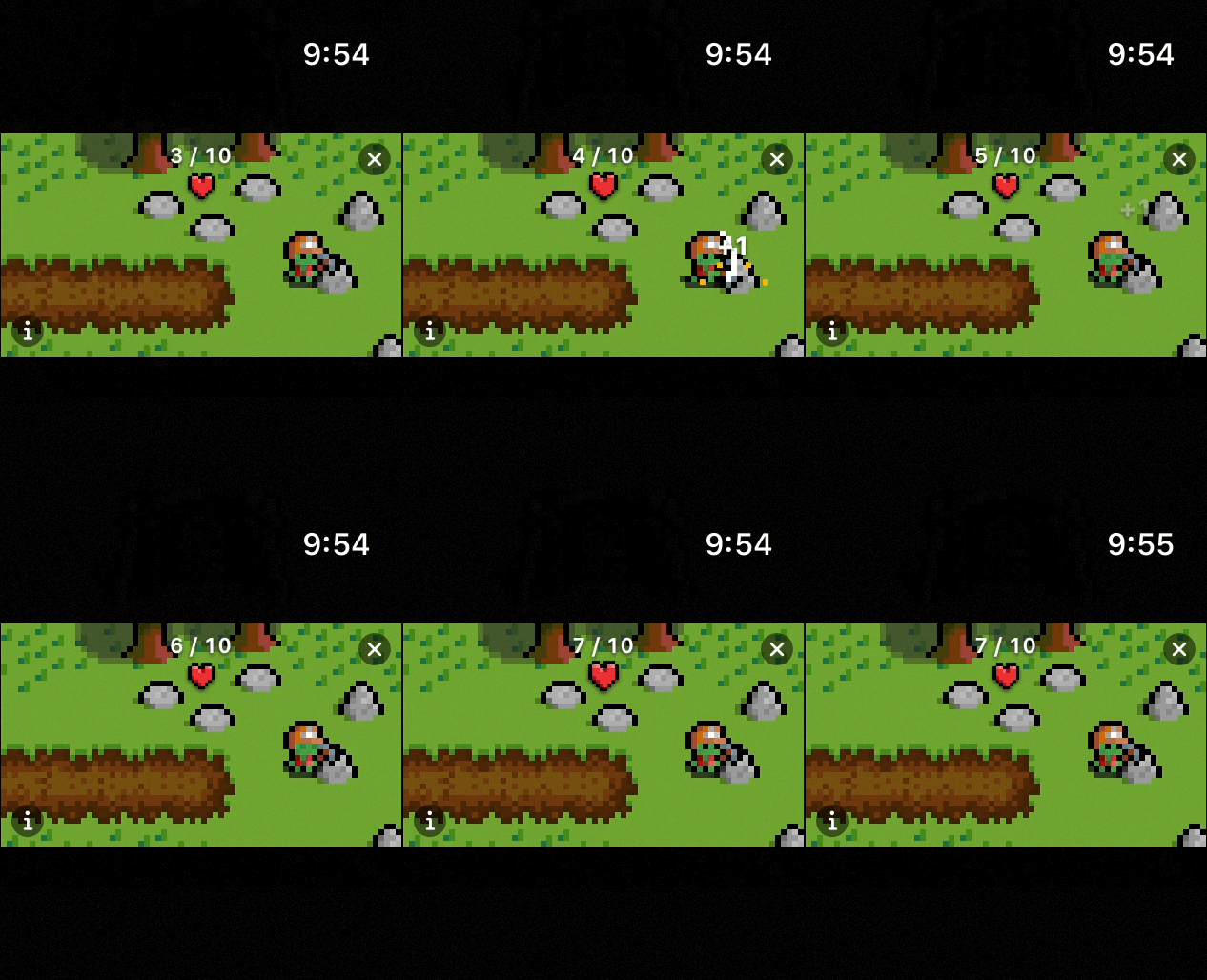
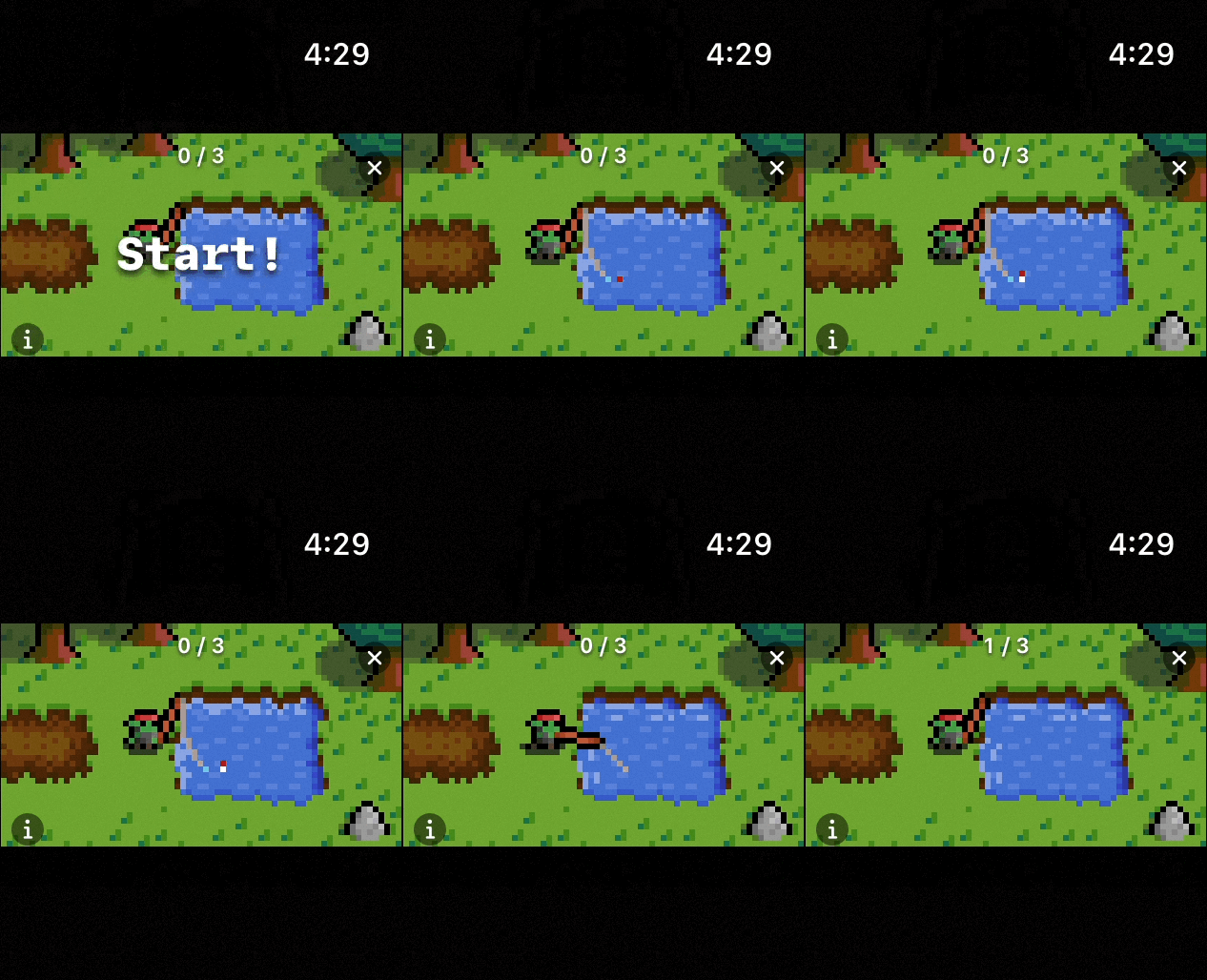
What comes out the other end is the whole rest of the economy: replacement gear, food that restores Energy, and potions that buff a quest before you send it out: Haste Potion cuts quest length 20%, Intellect Potion adds 25% experience, Resolve Potion restores 50 Morale, and the weekly-capped Hearty Feast and Elixir of Vigor hand back a much bigger Energy or Morale chunk once every seven days. (There's a full breakdown of how each of the ten minigames actually plays in its own post. This one's about how they fit into everything else.)
Gear: five slots that wear down and matter
Your orc has five equipment slots (weapon, head, chest, feet, ring) and every slot does something beyond looking the part. The weapon slot is fixed to your class (a Barbarian always wields the Great Sword, a Lich always wields the Ice Orb), but the class-specific Swift variant, a rare Pillage drop, cuts 20% off quest duration once equipped. The other four slots hold rare upgrade items that stack real bonuses: Shadow Cowl cuts quest Energy cost 10%, Longmarch Shoes cuts quest duration 10%, Veteran's Plate halves gear wear, Gatherer's Cowl adds a bonus material drop per gather, Stalwart Plate doubles the interval between Morale decay ticks, Ring of Vigor multiplies ring-close Energy rewards by 1.5×, Ring of Fortune multiplies your rare-drop odds by 1.5×, and Forager's Boots add a flat bonus to minigame yields.
None of it is permanent. Every completed quest wears each equipped piece down 5–10%, randomly rolled per slot, and a piece that hits zero breaks outright. The only way back is a repair run: back to the anvil or the workbench, spending crafted materials to restore full durability. It's the loop closing on itself: quest to get loot, gather and craft to keep the loot functional, quest again.
Leveling: XP, class choice, and the six-rung ladder
Before you've picked a class, XP just accumulates. At 100 XP a "+" button appears and opens the class selection screen: nine options at launch (Barbarian, Berserker, Druid, Lancer, Monk, Rogue, Shaman, Warlock, Warrior) each with a fixed weapon, a Might/Cunning/Focus affinity, and a flavor-text bio that takes the premise more seriously than it should (the Berserker, per its own description, skips the warm-up and "proceeds directly to turning an alarming shade of red"). Pick one and your orc jumps to level 1 on the spot, sprite and all.
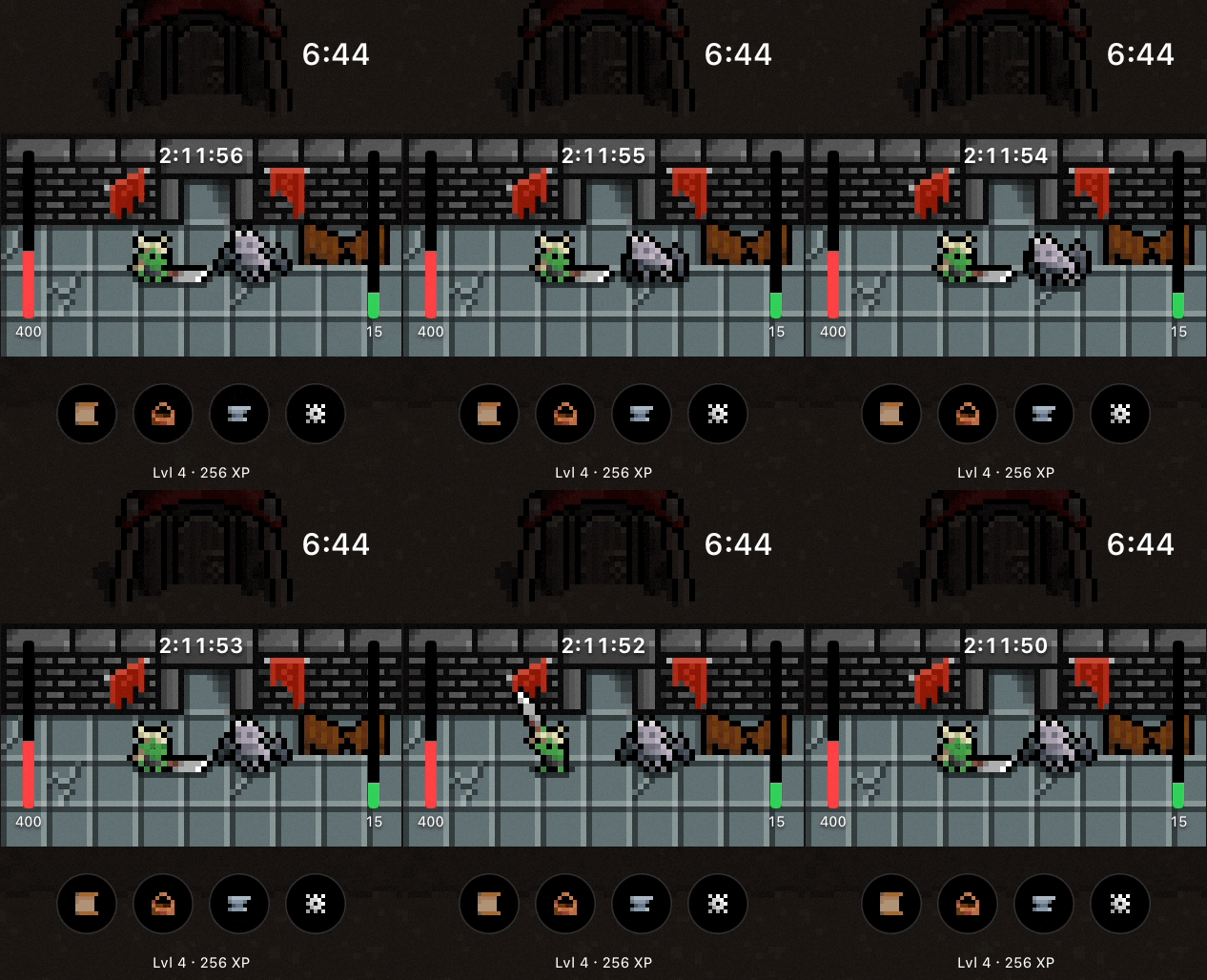
From there it's a straight climb: 400 XP to reach level 2, 800 to level 3, 1,200 to level 4, 1,600 to level 5, 2,400 to level 6. Every level past 1 changes more than a number: new sprite frames, and starting at level 3, a class-specific special attack that fires into the normal quest-battle rotation with its own animation and, for several classes, a spell overlay layered over the fight. A level-6 Warlock's special isn't the same swing as a level-3 Warlock's; the whole attack sequence gets replaced as you climb.
Epic classes: the reward for reaching the top
Level 6 is the ceiling for the nine starting classes, but it's also the door to three more. The Epic Classes screen unlocks Reaper, Raider, and Lich: each a full alternate build with its own weapon (scythe, saddle, ice orb), its own sprite set, and its own combat quirks that the standard classes don't share, at a flat cost of 2,400 XP each, matching the level 5→6 climb you just finished.
Unlocking one doesn't erase your progress: it's an additional option layered onto a maxed character, purchased with XP you'd otherwise have nowhere left to spend. Once unlocked, an epic class stays unlocked permanently, through retirement and beyond, so a fresh level 1 orc can start life as a Raider if you've already earned the right to it.
Building your camp
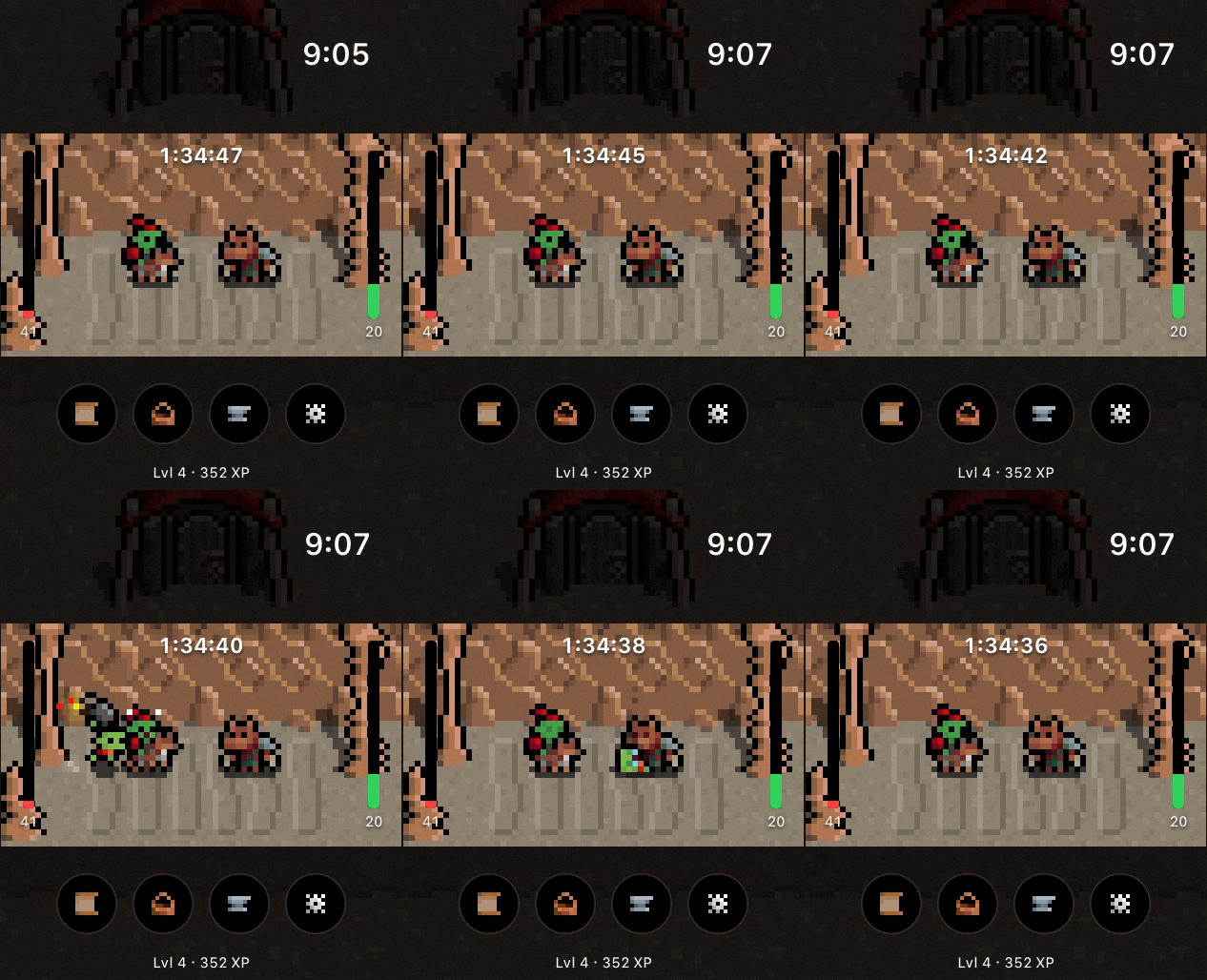
Camp is the one system that isn't tied to your current orc's stats: it's tied to your account. Six camp levels exist, each one bought with steel bars, planks, cowls, breastplates, and shoes in escalating amounts (level 2 costs 4 steel bars and 4 planks; level 6 costs 10 of each, plus the flat armor pieces every tier needs). Each level chips 2% off quest Energy cost, so a maxed camp knocks a full 10% off the price of every quest you run from then on.
The catch is that camp can never outpace the orc living in it: you can upgrade to at most one level above your orc's current level, capped at 6 either way. A level-2 orc can push camp to level 3 and no further, even with a warehouse of steel bars sitting unused. It's a soft brake that keeps camp progress and orc progress climbing together instead of letting a stockpile trivialize the early game.
Retirement: burning it down on purpose
Eventually you'll have a level 6 orc, maybe two unlocked epic classes, gear ground down and repaired a dozen times over. Retirement is the option that shows up on the Status screen once there's something worth retiring: it archives your current orc (name, level, class, the date) into a permanent list, then wipes level, XP, class, name, and quest count back to zero. Energy resets to its fresh-start value, Morale resets to its fresh-start value, and gear resets to the default starting loadout.
What survives is the point of doing it at all: your camp level, every epic class you've unlocked, and, deliberately, your entire inventory. Every steel bar, every potion, every crafted meal carries straight into the new orc's bag. You're not grinding the supply chain back up from nothing; you're walking a fresh level-0 orc into a fully stocked camp and choosing a different class this time, maybe one of the epics you just bought the rights to. It's less a reset button than a decision to retire a character that's finished its story and see what a different one does with everything you've already built.
The whole shape of it
Rings closed and minutes spent breathing become Energy and Morale. Energy and Morale buy quests. Quests hand back XP, materials, and the occasional rare drop. Materials run through ten minigames into gear, food, and potions. Gear breaks and gets repaired with what you just crafted. XP levels your orc, unlocks a special attack every few levels, and eventually buys an epic class outright. Camp upgrades make every future quest a little cheaper, gated to how far your orc has actually come. And when a character's run its course, retirement lets you keep the parts that took real effort to build (the camp, the epic unlocks, the stocked inventory) and start the character part over.
None of it needs a phone. It all happens on a screen smaller than a matchbook, fed by rings you were probably going to close anyway.